What Is Roof Underlayment Damage and Why Does It Matter for Madison Homeowners?
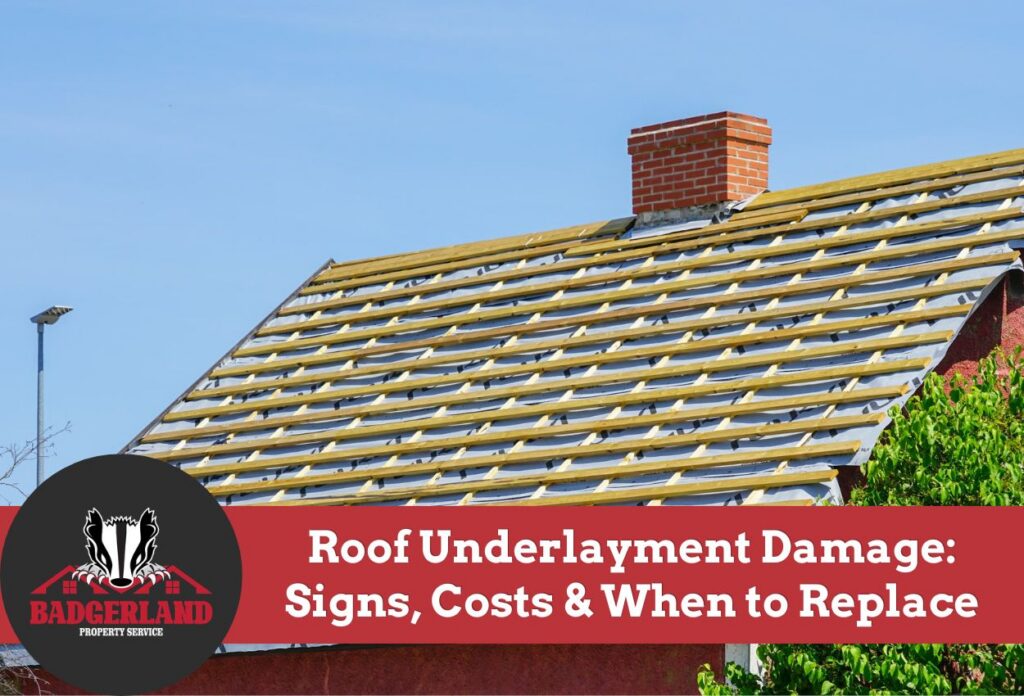

Roof underlayment damage occurs when the protective layer between your shingles and roof deck tears, cracks, or deteriorates, and in Madison, WI, with 50+ inches of annual snowfall and 30+ temperature changes per year, that damage can happen faster than in most parts of the country. Once the underlayment fails, water has a direct path to your roof deck, sometimes within a single heavy rain or snowmelt.
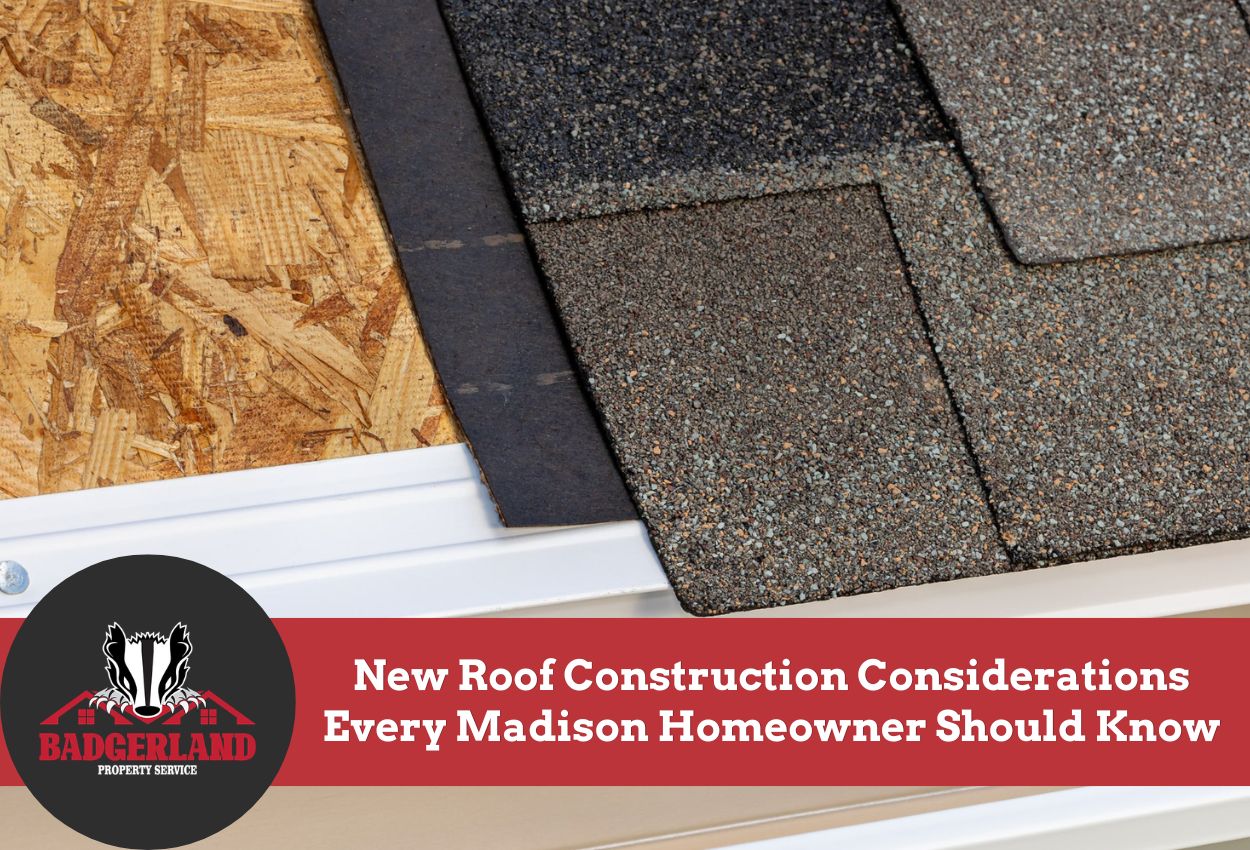
Underlayment is not visible from the ground, but it does the heavy work of keeping moisture out. Shingles take the first hit from hail, wind, and ice. The underlayment catches everything the shingles miss. When both layers are compromised, water reaches the wooden roof decking below, and that is where rot, mold, and structural damage begin.
If you have noticed water stains on ceilings, curling shingles, or signs of ice dams along your roofline, roof underlayment damage may already be a factor. This article covers how to spot it, what causes it in Madison’s climate, and what your repair options look like.
*Please note, price ranges listed in this article may not reflect the final cost of your project. Prices are subject to change based on various factors such as local labor rates, material quality, and more. All costs established in this article are rough estimates based on average industry rates.
What Are the Signs of Damaged Roof Underlayment You Can Identify Without a Full Tear-Off?
Most signs of damaged roof underlayment show up in two places: inside your attic and outside along the roofline. In Madison, the lower 3 feet of the roof slope deserves the closest attention because ice dam formation accounts for a large share of underlayment tears in that zone.
Interior Signs to Check in Your Attic
- Water stains on attic sheathing or insulation: Brown or yellow staining on wooden roof decking indicates water has already passed through the underlayment. This points to underlayment failure, not just a loose shingle.
- Daylight visible through the roof decking: Any gaps or pinhole light visible from inside the attic mean the underlayment has torn or separated, leaving the deck fully exposed.
- Wet or compressed insulation near the eave: Moisture in this zone, especially within 12 inches of the interior wall line, often signals a missing or degraded ice barrier. Under the Wisconsin building code, a self-adhering ice barrier must extend at least 12 inches inside the interior wall line. A missing or failed barrier in this area is a code-compliance issue, not just a performance concern.
Exterior Signs Visible from the Ground or Roof Edge
- Lifted or missing shingles with exposed dark material beneath: That dark layer is underlayment. Once it is exposed to UV rays, it degrades within one to two seasons without shingle protection above it.
- Granule loss concentrated on lower roof sections: Heavy granule loss near the eave, often from hail or ice dam pressure, strips shingle protection and accelerates underlayment wear in the same area.
- Visible wrinkling or bubbling along the rake or eave edge: Underlayment that has buckled or shifted no longer lies flat against the deck, allowing wind-driven water to get underneath.
- Ice dam staining or rust streaks along the lower slope: Rust from exposed fasteners in this zone often means the ice barrier has failed, and water has been sitting against the deck through multiple temperature changes.
If any of these signs appear in the lower 3 feet of your roof slope, the ice barrier layer required by Wisconsin code should be inspected for compliance before the next winter season. Spotting these warning signs early can prevent a full roof deck replacement down the road. A professional residential roof inspection can confirm whether the ice barrier and underlayment meet current code requirements.
What Causes Roof Underlayment to Fail, and How Fast Does It Deteriorate?
UV exposure, temperature changes, hail impact, and installation error are the four primary causes of underlayment failure, and each one works on a different timeline. #15 felt left exposed to direct sun can begin breaking down in as few as 30 to 90 days without shingle coverage above it. Hail impact can compromise the underlayment immediately on contact. Temperature changes weaken felt-based products over multiple winters, while installation errors like improper overlap or missed fasteners may not show failure until the first major rain or ice dam.
| Underlayment Type | Rated Lifespan | Puncture Resistance | Performance Under Temperature Changes |
|---|---|---|---|
| #15 roofing felt | 10 to 15 years | Low tears under moderate hail or foot traffic | Prone to cracking and brittleness after repeated freeze-thaw stress |
| #30 roofing felt | 15 to 25 years | Moderately heavy base resists minor puncture | Better than #15 felt, but still absorbs moisture and stiffens in cold |
| Synthetic underlayment | 40 to 50 years | Most products are rated for Class 4 impact resistance applications | Remains flexible in cold. Resists moisture absorption through repeated temperature changes |
Synthetic underlayment typically outlasts asphalt shingles with a 40 to 50 year lifespan and a standard 25 to 30 year shingle lifespan, meaning a roof replacement may never require an underlayment swap if synthetic was installed correctly the first time. The reverse is true for older Madison homes: a house with 20-year-old shingles and original #15 felt underneath may already have underlayment past its service life, even if the shingles above still look passable from the ground. That mismatched underlayment under aging shingles is one of the most common hidden problems found during inspections in this area.
Can a Torn or Deteriorating Roof Underlayment Actually Cause Water Damage Inside Your Home?
Yes, torn roof underlayment water damage is a direct, documented cause of interior structural damage, and it can begin within 72 hours of sustained moisture exposure. When cracked or missing shingles let water past the first line of defense, that water channels under the torn underlayment and saturates the roof deck below. OSB roof decking, the most common roof decking material in Madison-area homes, can start to swell and delaminate in as little as three days of continuous moisture contact. Once delamination starts, the deck loses structural integrity and often requires full replacement rather than a simple patch.
Chronic Leaks and Acute Failures
Roof underlayment deteriorating and causing leaks follows two very different patterns. An acute failure of a hail puncture, a wind-lifted shingle, or an ice dam uplift tearing the barrier, produces immediate and often visible water intrusion. A chronic leak from a pinhole or seam separation is harder to catch. Chronic underlayment leaks often go undetected for one to two full seasons before any interior damage becomes visible, because the water volume per storm is small enough to partially evaporate before it stains drywall or insulation. When acute failures occur, emergency roof tarping can protect the deck from further moisture intrusion while permanent repairs are arranged.
Why Madison’s Rainfall Intensity Makes Small Gaps Worse
Madison receives approximately 33 inches of annual precipitation, with peak intensity in June and July. During a single high-intensity summer storm, even a small underlayment gap, a separated seam, or a hail bruise that has worn through can allow gallons of water into the roof assembly in under an hour. That volume overwhelms the deck’s ability to shed moisture and accelerates the timeline from minor underlayment deterioration to visible interior water damage.
How Do You Tell If Roof Underlayment Is Bad Enough to Require Full Replacement or Spot Repair?
Knowing how to tell if the roof underlayment is bad comes down to two factors: how large the damage zone is and how old the underlayment is. A professional inspection, which typically costs $150 to $400 in the Madison area, is the right step before committing to either path.
Spot Repair Candidates
- Isolated hail impact zone under 10 square feet: Damage from a single hailstorm, confined to a small section with no surrounding brittleness, can often be addressed without pulling the full layer.
- Underlayment under 10 years old: A younger felt or synthetic product with no widespread cracking or seam separation usually has enough remaining service life to justify targeted repair.
- No deck saturation present: If the wood roof decking beneath the damaged zone is dry and structurally sound, the damage has not progressed far enough to require full tear-off.
- Damage limited to one slope: A single wind-lifted section or small ice dam tear on one roof face, with intact underlayment on all other slopes, points toward spot repair rather than full replacement.
Full Replacement Candidates
- Underlayment over 20 years old: Felt-based product at this age is almost always brittle, shrinking, or crumbling. Patching it adds cost without fixing the underlying failure across the whole surface of the roof.
- Brittle or crumbling material throughout: When underlayment tears or flakes in multiple zones, not just one, the deterioration is system-wide, and spot repair will not hold.
- Active deck rot present: Saturated or rotting OSB roof decking means moisture has been passing through the underlayment long enough to cause structural damage. The underlayment must come off to address the deck below.
- Ice dam damage spanning the lower 3 feet across multiple seasons: Repeated uplift and refreezing along the eave line degrades the ice barrier and felt beneath it across a wide zone, making full replacement the more cost-effective choice.
Madison-area roofing contractors most commonly recommend spring inspections in April and May to assess winter and ice dam damage, and fall inspections in September and October to catch pre-winter vulnerabilities. Catching underlayment deterioration before a second winter can prevent deck replacement costs that run $3 to $6 per square foot on top of underlayment labor. Some homeowners’ insurance policies cover underlayment replacement when damage is storm-related worth confirming with your carrier before scheduling repairs. When needed, professional roof repair services can address underlayment issues and help prevent more extensive damage.
What Does It Cost to Repair or Replace Damaged Roof Underlayment in Madison, WI?
Replacing roof underlayment during an active shingle re-roof costs $0.15 to $0.30 per square foot in materials for a synthetic product, and the $0.05 to $0.10 for #15 felt, but the real cost difference shows up over time, not at installation. For a 1,500 square foot Madison-area roof, here is how the four most common repair and replacement scenarios compare.
| Scenario | Material Cost (per sq ft) | Labor Cost (per sq ft) | Total Estimated Range (1,500 sq ft roof) |
|---|---|---|---|
| Spot underlayment repair only | $0.15 to $0.30 | $1.00 to $2.00 | $300 to $900 |
| Underlayment replacement during shingle re-roof | $0.15 to $0.30 | $0.50 to $1.00 | $975 to $1,950 |
| Underlayment replacement with partial deck repair | $0.15 to $0.30 | $1.50 to $3.00 | $2,475 to $4,950 |
| Full underlayment and deck replacement | $0.15 to $0.30 | $3.00 to $6.00 | $4,725 to $9,450 |
Synthetic underlayment at $0.15 to $0.30 per square foot works out to roughly $0.004 to $0.007 per square foot per year over a 40 to 50 year lifespan. #15 felt at $0.05 to $0.10 per square foot sounds cheaper, but at a 10 to 15 year lifespan, the cost-per-year-of-protection is nearly the same, and felt requires replacement more often. The window where cost savings are biggest is during an active re-roof: adding fresh underlayment while shingles are already removed typically adds only $200 to $500 in materials for a standard 1,500 square foot roof.
Skipping underlayment replacement during a re-roof and addressing it as a separate project later means paying full labor costs again, often $750 to $1,500 or more for work that could have been done at minimal added cost the first time. Badgerland Property Service can walk through which scenario fits your roof’s current condition before any work is scheduled, whether that means a targeted residential roof repair or a full residential roof replacement.
Ready to Find Out If Your Roof Underlayment Is Damaged? Contact a Madison Roofing Expert Today.
A professional underlayment inspection costs $150 to $400 on average and can confirm damage that is invisible from the exterior, potentially saving thousands compared to the $5,000 to $12,000 remediation costs that follow an ignored ice dam. Spring is the best window to act in Madison, WI, before summer heat above 140 degrees Fahrenheit on south-facing slopes accelerates underlayment aging further.
Badgerland Property Service serves Madison-area homeowners with professional roof inspection focused on underlayment condition, moisture readings, and ice dam damage assessment before problems reach the roof decking below.
Schedule a free roof inspection.
Not ready to schedule? Learn more about roof damage repair services.