Roof Replacement vs. Restoration: Which Does Your Roof Need?
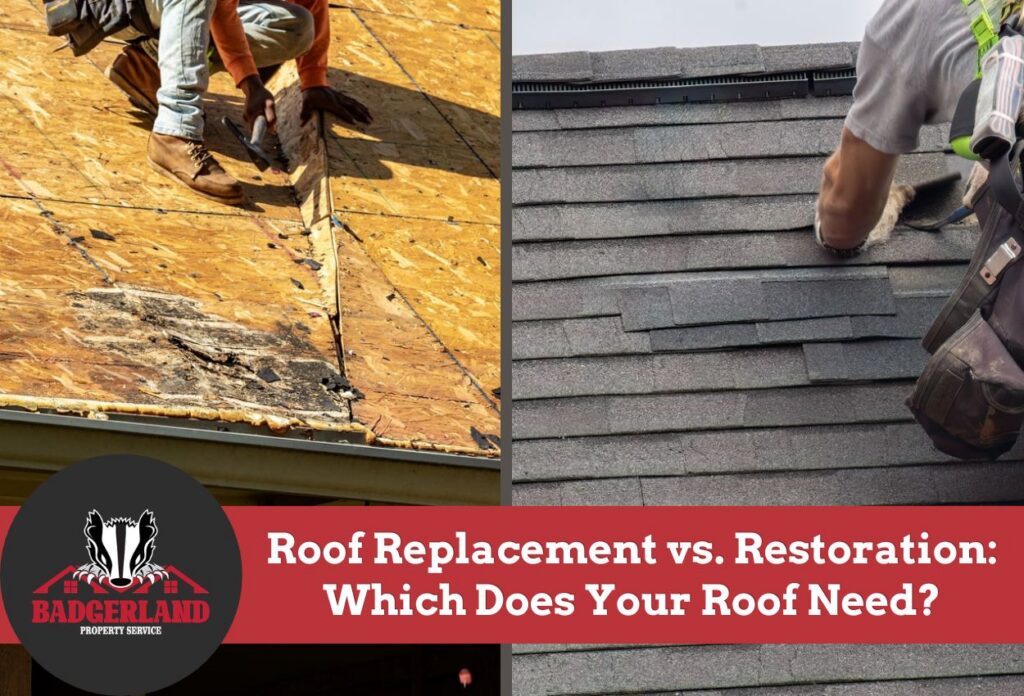

Roof restoration extends roof life by 5 to 10 years at 40% to 60% of replacement cost, while full replacement removes all existing materials and installs a new system with a 25 to 50 year lifespan. These are two very different solutions, and choosing the wrong one costs homeowners thousands of dollars.
Most residential roofs in Madison are asphalt shingle systems built 20 to 40 years ago. That means many are already at or past the point where restoration alone may not be enough. Wisconsin’s temperature changes, high humidity, and severe weather seasons push older roofs toward failure faster than in milder climates.
*Please note, price ranges listed in this article may not reflect the final cost of your project. Prices are subject to change based on various factors such as local labor rates, material quality, and more. All costs established in this article are rough estimates based on average industry rates.
How Do Roof Replacement vs. Restoration Costs Actually Compare?
Restoration runs $1,500 to $4,500 for a typical Madison home, while full replacement costs $8,000 to $20,000+, a difference of several thousand dollars upfront that depends heavily on your roof’s current condition.
| Cost Factor | Roof Restoration | Roof Replacement |
|---|---|---|
| Average Total Project Cost (1,500 to 2,500 sq ft) | $1,500 to $4,500 | $8,000 to $20,000+ |
| Cost per Square Foot | $1 to $3 | $4 to $10+ |
| Project Duration | 1 to 2 days | 2 to 5 days |
| Permit Requirements | Typically none | A Dane County permit is required |
| Disruption Level | Low, no-tear-off noise or debris | High full roof tear-off, dumpster, crew on-site multiple days |
Wisconsin requires a Wisconsin DSPS Dwelling Contractor License for full replacement projects, which adds permitting fees and scheduling lead time that restoration projects typically skip. That difference in administrative cost and timeline matters when budgeting.
Restoration costs less upfront, but if a roof is already borderline, homeowners may still need full replacement within 5 to 10 years, making the total 10-year spend higher than replacing it now. Restoration saves money on a roof with surface wear. It delays the inevitable on a roof that is structurally failing.
How Do You Know If Your Roof Needs Replacement or Restoration?
A roof under 15 years old with surface wear and no structural damage is typically a restoration candidate, while a roof 20+ years old with widespread damage almost always requires full replacement.
Restoration Is Likely Appropriate When
- The roof is under 15 years old with fewer than 3 localized repair areas and no signs of deck rot or structural softness.
- Granule loss is limited surface wear that affects less than 30% of the total shingle area, leaving most shingles intact and lying flat.
- No active interior leaks are present at multiple points, and any past leaks were isolated to a single area and already repaired.
- Only one shingle layer exists on the deck, allowing treatments to bond properly and ventilation to function as designed.
- The roof deck feels solid underfoot with no soft spots, sagging, or visible moisture damage in the attic below.
Replacement Is Necessary When
- The roof is 20+ years old, a key threshold where Wisconsin’s temperature changes and high humidity have likely pushed shingles past the point of effective restoration.
- Two or more shingle layers are already installed, which prevents proper adhesion of restoration treatments and may violate the Dane County building code.
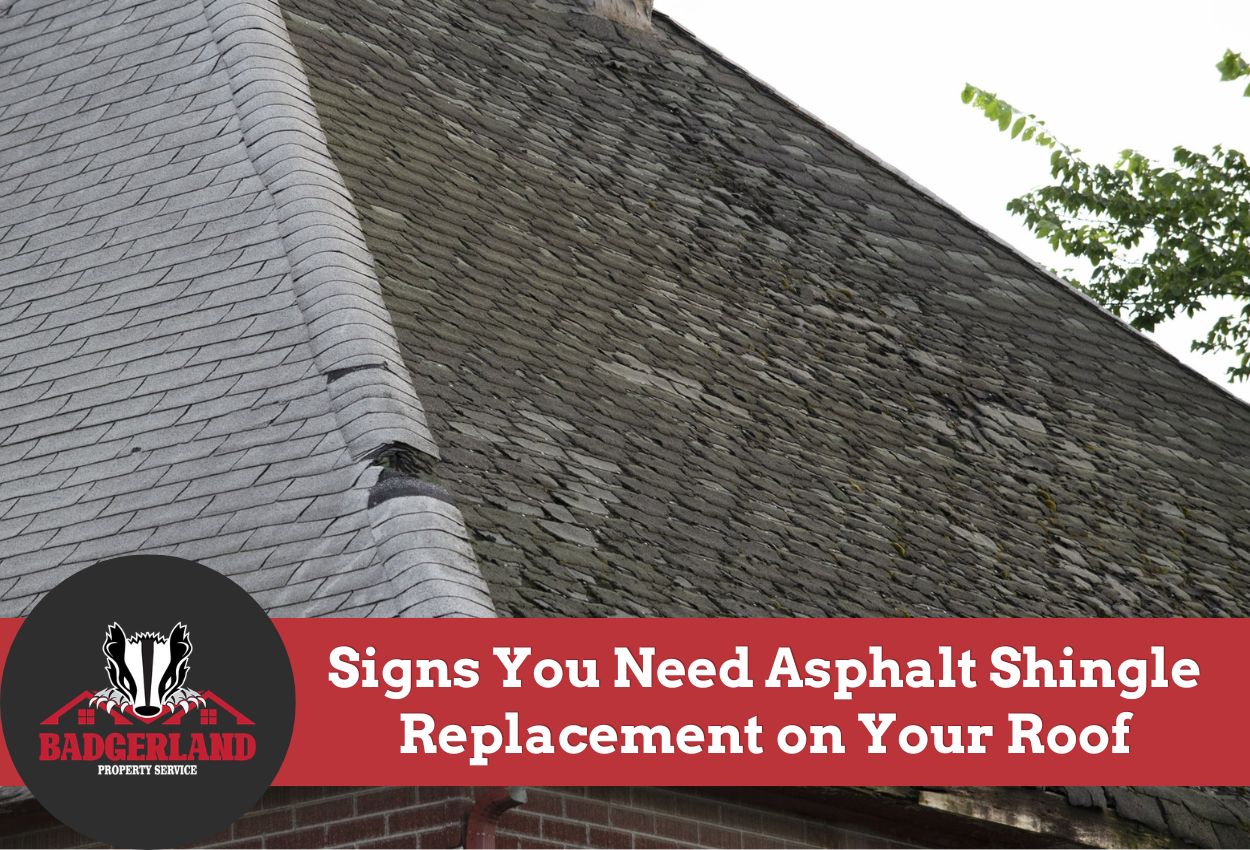
- Shingle curling spans more than 25% of the surface of the roof \. This is one of the clearest signs a roof is too damaged for restoration and signals widespread material breakdown.
- Active leaks appear at multiple interior points, or visible sagging is present anywhere along the roofline, indicating deck or structural damage below the shingles.
- Multiple prior repairs have already been completed, meaning the roof has repeatedly failed, and patching no longer addresses the underlying deterioration.
Madison homeowners should factor in one additional consideration: Wisconsin’s temperature changes throughout winter accelerate granule loss and cracking on aging asphalt shingles faster than in milder climates. A Madison roof showing moderate wear may be much closer to failure than it appears. Professional inspection before assuming restoration is viable can prevent an expensive mistake.
Which Option Lasts Longer and What Does That Mean for Long-Term Value?
Replacement lasts longer. A new architectural asphalt shingle roof carries manufacturer warranties of 30 to 50 years and is rated to withstand winds of 110 to 130 mph, while restoration adds only 5 to 10 years to a roof that is already aging. Restoration does not reset the roof’s age or start a new warranty clock it simply extends the existing roof’s remaining life.
Replacement also opens the door to Class 4 impact-resistant shingles, which may reduce homeowners’ insurance premiums by 20 to 30% in Wisconsin, a long-term savings that restoration cannot offer. That annual discount can offset a meaningful portion of the replacement cost over time.
| Option | Expected Lifespan Added | Warranty Reset | Insurance Discount Eligibility | Moss/Algae Retreatment Needed |
|---|---|---|---|---|
| Restoration | 5 to 10 years | No | No | Yes, typically every 3 to 5 years |
| Replacement | 30 to 50 years | Yes | Yes (Class 4 shingles) | No algae-resistant shingles available |
For a Madison roof already 20+ years old, those 5 to 10 extra years from restoration may not justify the cost if replacement is coming regardless. Homeowners weighing long-term value should factor in the warranty reset, the potential insurance savings, and the full 10-year cost picture, not just the upfront difference.
When Is Roof Restoration Worth It Before Committing to Full Replacement?
Roof restoration delivers the best return when a roof has 7 to 12 years of functional life remaining. Under those conditions, restoration can return $1.50 to $2.00 in home value or cost avoidance for every $1.00 spent. That math works especially well for homeowners planning to sell within 5 years or those who need to defer a larger capital expense while keeping the roof performing.
Restoration becomes a poor investment in three specific situations: the roof is already 20+ years old, a restoration treatment was applied within the last 5 years, or the deck itself shows structural compromise. Retreating a roof too soon produces diminishing returns, the surface cannot absorb or bond treatments as well after prior application. And when the deck is compromised, no surface treatment fixes the underlying problem. In those cases, spreading replacement cost over 30 years is the more economical path.
Madison’s Seasonal Window Matters
Restoration treatments require surface temperatures above 50 degrees for proper adhesion. In Madison, that limits the viable treatment window to approximately May through September, roughly 5 months. Scheduling delays that push work into October or November risk leaving a deteriorating roof exposed to a full Wisconsin winter of temperature changes, moisture, and ice damage. That means a roof that could have been treated in summer may need full replacement by spring.
Homeowners in Madison who are on the fence about restoration versus replacement should schedule a roof inspection early in the season. A 5-month window closes faster than most people expect.
What Does Roof Replacement or Restoration Actually Cost Over 10 Years in Madison?
When you add upfront costs, maintenance, and emergency repairs over 10 years, immediate replacement typically runs $9,500 to $21,000 while a restoration-first path can reach $14,000 to $22,000 if the roof still needs replacing within 8 years.
| Cost Category | Restoration Now + Replacement Later | Replacement Now |
|---|---|---|
| Upfront Project Cost | $1,500 to $4,500 (restoration) + $8,000 to $20,000 (replacement later) | $8,000 to $20,000 |
| Estimated Maintenance Over 10 Years | $800 to $2,000 | $300 to $800 |
| Probability of Emergency Repair Within 10 Years | Moderate to high $1,200 to $3,500 per incident | Low $1,200 to $3,500 per incident if it occurs |
| Dane County Permit Cost | $150 to $400 (at time of replacement) | $150 to $400 |
| Total 10-Year Estimated Spend | $14,000 to $22,000 | $9,500 to $21,000 |
The crossover point is where the restoration-first path loses its advantage. If a restored roof requires even one emergency repair and still needs full replacement within 8 years, the total spend reaches $14,000 to $22,000 higher than the $9,500 to $21,000 for replacing it once now. In moderate-to-severe damage scenarios, restoration-first is the more expensive choice over a 10-year window. Dane County Residential Building Permits for full replacement average $150 to $400, and Madison contractors are required to carry state licensing, both costs appear in replacement quotes. Homeowners should request itemized quotes to compare like-for-like.
Ready to Decide? Here’s How to Get an Accurate Assessment for Your Madison Roof
Avoiding a $14,000 to $22,000 restoration-first mistake starts with one step: a professional inspection, not a visual estimate from the street. Only an in-person assessment can confirm whether the roof deck is solid, how much shingle area is affected, and whether restoration or replacement is the right call for that specific roof.
The best window for both restoration and roof replacement work in Madison runs from May through September. Booking early avoids contractor backlog and weather delays during peak season. Badgerland Property Service offers free inspections for Madison homeowners who ask specifically about both restoration and replacement options to get an honest, side-by-side comparison.
Schedule your free roof inspection.
Not ready to schedule? Learn more about roof restoration services.