What Does a Metal Roof Maintenance Guide Actually Cover for Madison Homeowners?
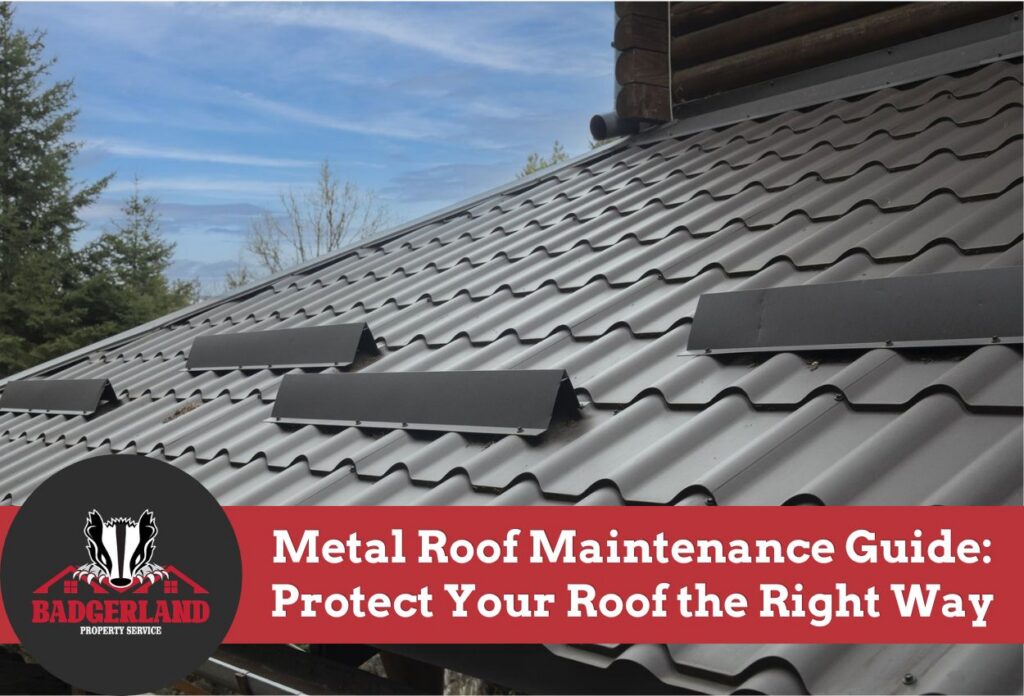

A metal roof lasts 40 to 70 years with proper maintenance, two to three times longer than asphalt shingles, which typically last 15 to 20 years. That lifespan advantage only holds if the roof gets the right care at the right times. This guide covers exactly what Madison homeowners need to protect that investment from start to finish.
Madison’s climate makes generic maintenance schedules unreliable. Roughly 50 to 55 inches of annual snowfall, repeated temperature swings that stress seams and fasteners, and moderate-to-high summer humidity all create conditions that a one-size-fits-all approach simply won’t address. Local factors like tree cover, ice dams, and spring storm season add even more pressure on metal roofing systems.
This guide walks through five main maintenance categories: inspection, cleaning, fastener and sealant care, rust and coating protection, and cost planning. Each section is built around the real conditions Madison homeowners face, not general advice written for a warmer or drier climate.
How Often Should You Inspect a Metal Roof in Madison, WI?
Inspect a metal roof at least twice per year, once in late April to early May after the worst temperature changes have passed, and again in September before snow season begins.
- Late April to early May inspection: Winter temperature swings expand and contract metal panels repeatedly, which can loosen fasteners, open seams, and lift flashing. This window catches damage before spring storms arrive.
- September inspection: A pre-winter check gives time to repair any failing sealants, loose fasteners, or coating wear before freezing temperatures make repairs difficult or unsafe.
- Seams and laps: Check for gaps or separation along panel edges, where repeated movement from temperature changes is most likely to cause problems.
- Exposed fasteners: Look for screws that have backed out or washers that appear cracked, compressed, or missing. Exposed-fastener systems need this check every cycle.
- Flashing at chimneys and vents: Inspect for lifted edges, rust staining, or sealant that has cracked and pulled away from the wall or curb.
- Pipe boots: Rubber or neoprene boots around plumbing vents crack within 10 to 15 years and are a common entry point for water.
- Ridge cap: Check for loose panels, gaps at the peak, or sealant tape that has dried and separated.
- Gutter attachment points: Look for sagging, pulled fasteners, or separation between the gutter and the drip edge.
- Panel coatings: Note any chalking, fading, or rust spots larger than a pinhead, which signal that touch-up or recoating may be needed soon.
- Valley debris accumulation: Clear leaves, needles, and compacted material that traps moisture and speeds up corrosion, especially in tree-heavy Madison neighborhoods.
Most metal roof manufacturers’ warranties, which typically run 30 to 50 years on panels and coatings, require documented annual inspections to stay valid. Skipping even one inspection cycle can void coverage and leave Madison homeowners paying out of pocket for repairs that should have been covered. A professional residential roof inspection ensures that documentation is complete and warranty requirements are met.
What Is the Right Way to Clean and Maintain a Metal Roof Without Causing Damage?
Soft washing at 500 to 1,000 PSI is the correct method for cleaning painted metal roofing. Pressure washing at 1,500 to 2,500 PSI risks stripping factory coatings and can void the panel or coating warranty. The difference between those two pressure ranges is not minor. One strips protective finishes: the other safely removes dirt, algae, and mildew without damaging the surface.
- Cleaning pressure: Stay between 500 and 1,000 PSI with a wide-angle nozzle: never exceed 1,000 PSI on painted or coated panels.
- Algae and mildew on shaded panels: North-facing and tree-shaded sections dry more slowly after rain, making them the most common spots for biological growth in Madison: treat with a diluted low-VOC cleaning solution before rinsing.
- Valley and gutter debris: Leaf and pine needle buildup in valleys traps moisture against panels year-round: clear valleys during every cleaning visit, not just in fall.
- Gutter clearing schedule: Clear gutters at least twice per year in the fall after leaf drop and in late winter before snowmelt to prevent ice dam formation and trapped moisture corrosion at the roof-to-gutter transition.
- Panel rinsing direction: Always rinse downward, following the panel seam direction, to avoid forcing water under laps or into fastener holes.
- Cleaning products: Avoid bleach-heavy or acidic cleaners; these break down Kynar and polyester coatings faster than weather alone.
After cleaning, walk the roof edge and check gutters for granules, paint flakes, or rust-colored water. These are early signs that a coating inspection is overdue. Pair cleaning visits with the same twice-a-year inspection schedule covered earlier to get the most out of each trip up the ladder.
How Do You Prevent Rust and Extend the Life of Metal Roof Coatings?
Factory Kynar and PVDF coatings on standing seam panels typically retain 70%+ of the film’s structural integrity for 30 to 40 years, while exposed-fastener systems with standard polyester coatings can show corrosion at cut edges and fastener holes within 10 to 15 years without touch-up maintenance. That performance gap comes down to coating type and how well those vulnerable spots are managed over time.
Cut edges, scratches, and screw holes are where rust almost always starts. Applying a compatible touch-up primer and rust-inhibiting paint to any exposed metal during the first maintenance cycle stops corrosion before it spreads. When panel surfaces show widespread chalking or coating loss, a full recoat with an elastomeric or silicone roof coating applied at the manufacturer-recommended thickness of 20 to 30 dry mils adds 10 to 15 years to panel life. Skipping that recoat window when coatings are still mostly intact costs far less than replacing panels that have corroded through. Homeowners facing widespread coating failure may benefit from a professional residential roof restoration to extend panel life without full replacement.
Madison-Specific Corrosion Risks
Three conditions drive most rust problems on Madison metal roofs. First, dissimilar metals at flashings, copper or aluminum in contact with steel panels, create a galvanic reaction that accelerates corrosion wherever the two metals touch. Second, debris buildup in valleys traps moisture against panel surfaces year-round, especially under tree cover common throughout Madison neighborhoods. Third, chloride-based ice melt products used on or near metal roofing are a direct corrosion trigger. Homeowners should switch to magnesium chloride-free or sand-based products on and around any metal roofing surface to protect both panel coatings and fasteners through the 40 to 50 inches of snowfall Madison sees in a typical year.
What Do Metal Roof Maintenance, Repairs, and Recoating Actually Cost?
Routine professional maintenance on a Madison-area metal roof runs $300 to $800 per year, far less than the cost of a single flashing replacement ($400 to $900) or panel replacement ($600 to $1,500) that skipped upkeep often causes.
| Task | DIY Material Cost | Professional Labor + Materials (Madison-Area Range) | Recommended Frequency |
|---|---|---|---|
| Annual inspection | $0 to $50 (binoculars, safety gear) | $150 to $300 | 2 times per year |
| Gutter cleaning | $20 to $60 (tools, gloves) | $120 to $250 | 2 times per year |
| Sealant/caulk replacement | $30 to $80 (tubes, primer) | $200 to $500 | Every 3 to 5 years |
| Fastener tightening and replacement | $40 to $100 (screws, washers) | $300 to $600 | Every 3 to 5 years |
| Full elastomeric recoating | $200 to $600 (materials only, 1,500 to 2,000 sq ft) | $1.50 to $3.00 per sq ft | Every 10 to 15 years |
Homeowners who skip 2 to 3 maintenance cycles on a 1,500 to 2,000 sq ft Madison home often face repair bills 3 to 5 times higher than what routine upkeep would have cost over the same period. A missed sealant replacement leads to water intrusion: ignored fastener wear accelerates panel movement and coating failure. Budgeting $300 to $800 per year for professional maintenance is the most cost-effective way to protect a roof designed to last 40 to 70 years. Badgerland Property Service offers scheduled maintenance plans built around Madison’s climate so nothing gets missed between inspections.
Should You Handle Metal Roof Maintenance Yourself or Hire a Professional in Madison?
Four tasks are reasonable for experienced DIY homeowners, but five others require a licensed roofing contractor, and getting that line wrong can cause more damage than doing nothing at all.
Tasks DIY Homeowners Can Handle
- Debris removal on low-slope sections: Clear leaves and branches from sections accessible from a stable ladder, but only on roofs at or below a 6:12 pitch. Steeper slopes require fall protection equipment per OSHA standards.
- Gutter cleaning: Clear gutters at least twice per year, in fall and late winter, using a ladder on solid, level ground. This takes under two hours on most homes.
- Visual inspection from ground level: A ground-level walkthrough or inspection from a safe ladder position catches obvious issues like missing panels, rust streaks, or separated ridge caps without stepping onto the roof.
- Touch-up paint on minor scratches: Apply compatible touch-up primer to scratches under 2 inches using a small brush. Larger areas or Kynar-coated panels need a professional match to avoid adhesion failure.
Tasks That Require a Licensed Roofing Contractor
- Re-sealing flashing at chimneys and wall transitions: Sealant selection matters here. Using non-paintable silicone on a Kynar-coated panel causes adhesion failure within 1 to 2 years.
- Replacing pipe boots: Rubber and neoprene boots crack within 10 to 15 years and need proper sizing, seating, and compatible sealant, not just caulk over the old boot.
- Fastener tightening or replacement across a full roof section: Inconsistent torque or wrong screw sizing across dozens of fasteners creates new leak points faster than it fixes old ones.
- Seam separation repair: Opening and re-sealing a standing seam requires manufacturer-specific tools and materials to restore a watertight connection.
- Full coating application: Applying elastomeric or silicone coatings at the correct 20 to 30 dry mils requires professional equipment and surface prep to bond correctly.
Roofing contractors performing metal roof work in Wisconsin should carry general liability insurance with a minimum of $1 million per occurrence, which is standard in this market. Always request a written maintenance report after any professional service to support manufacturer warranty documentation.
How Much Value Does Proper Maintenance Add to a Metal Roof Over Its Lifespan?
A maintained metal roof on a 1,500 to 2,000 sq ft home costs roughly $500 per year to upkeep, totaling $20,000 over 40 years, and reaches its full 40 to 50 year service life. A neglected roof on the same home often requires full replacement at 20 to 25 years, for $12,000 to $20,000, plus the loss of 15 to 25 years of remaining service life that was already paid for. That early replacement does not eliminate future maintenance costs either. The homeowner now starts the maintenance clock over again on a brand-new roof.
Resale value is another real factor. Homes with documented roof maintenance records tend to sell faster and face fewer inspection issues. A well-maintained metal roof can contribute 1% to 6% to resale value relative to a home with a visibly aged or damaged roof, based on roofing industry appraisal guidance. Buyers and inspectors notice the difference.
Warranty protection adds a third layer of financial value. Most metal roofing manufacturers require documented maintenance to keep coverage valid. Rust prevention treatments and coating touch-ups done before problems appear rather than after preserve that coverage. A single warranty claim on panel replacement or coating failure, which can run $600 to $1,500 per panel, is only covered if maintenance records show the roof was properly cared for. Skipping documentation means paying out of pocket for repairs that a valid warranty would otherwise cover.
Ready to Protect Your Metal Roof in Madison? Here’s Your Next Step.
Catching sealant wear, fastener movement, or early corrosion during the April to May post-winter window costs a fraction of the $400 to $900 flashing replacements or $600 to $1,500 residential roof repair costs that deferred maintenance causes. Badgerland Property Service provides metal roofing services for Madison homeowners on both standing seam and exposed-fastener metal roofing systems and knows exactly what Madison’s winters leave behind.
Schedule a professional roof inspection or maintenance assessment this spring before small problems from the freeze-thaw season turn into larger repair bills.