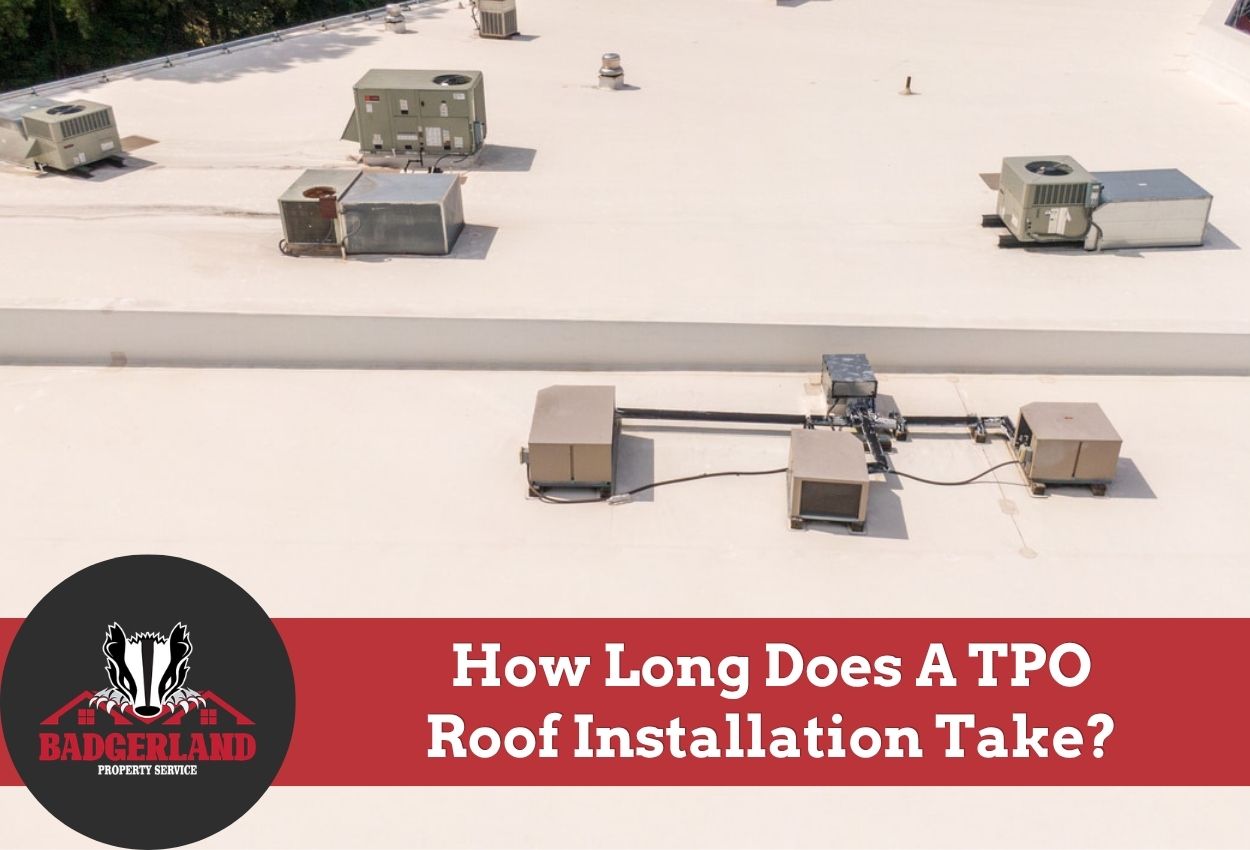
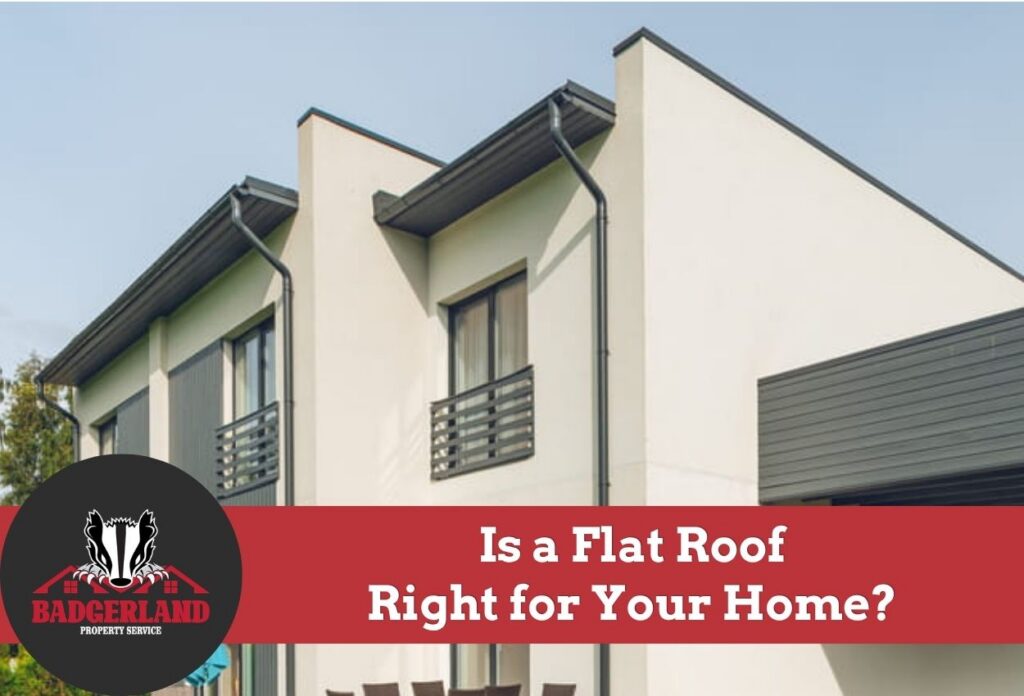

Flat roofs can work well for garages, additions, and mid-century modern homes. However, they are not a common fit for traditional single-family homes in South-Central Wisconsin. Heavy snowfall and temperature changes put serious stress on flat roofing systems, and the region typically sees around 52 inches of snowfall annually. That adds up fast on a surface without a slope to shed it.
Flat roofing involves specific costs, lifespan expectations, and maintenance needs that property owners should understand before deciding if it’s the right fit for their building and budget.
How Do Flat Roofs and Pitched Roofs Actually Compare on Cost and Lifespan?
Depending on the system, flat roofs cost more upfront at $5 to $13 per square foot installed versus $3.50 to $7 per square foot for pitched asphalt shingle roofs.
| Metric | Flat Roof | Pitched Asphalt Shingle Roof |
|---|---|---|
| Installation cost per sq. ft. | $5 to $11 (TPO); $6 to $13 (EPDM) | $3.50 to $5 (standard 3-tab); $5 to $7 (architectural) |
| Average lifespan | 15 to 20 years (TPO); 20 to 25 years (EPDM) | 20 to 25 years (standard 3-tab);25 to 30 years (architectural) |
| Heavy snow performance | Snow accumulates; requires manual removal | Sheds snow passively with slope |
| Maintenance frequency | 2+ inspections per year recommended | 1 inspection per year |
Flat roofs are not a single product. EPDM membranes last 20 to 25 years and TPO systems average 15 to 20 years, so the system you choose changes the math on long-term value. Pitched roofs drain rain and shed snow on their own, while flat roofs depend on internal drains or scuppers, which can freeze or clog in a South-Central Wisconsin winter and lead to ponding water. Ponding is the leading cause of flat roof membrane failure, and it is a realistic risk in a region that sees 52 inches of snowfall in a typical year.
What Are the Real Pros and Cons of a Flat Roof for a Residential Home?
Flat roofs offer genuine advantages, but Wisconsin’s weather makes them a harder choice for primary homes.
Pros:
- Easier rooftop equipment access: HVAC units, solar panels, and mechanical equipment are simpler to install and service on a flat roof, reducing labor costs for any future roofing work.
- Simpler installation on additions: When attaching a flat-roof addition to an existing home, the connection point is easier to flash and seal than matching a new pitched section to an existing roofline.
- Usable rooftop space: With the right design, a flat roof can support a deck or green roof area, though this is more common in urban settings than in suburban Dane County neighborhoods.
Cons:
- Higher material and installation cost: Depending on the system, flat roof membranes typically run $5 to $13 per square foot installed, compared to $3.50 to $7 per square foot for pitched asphalt shingle roofs.
- Stress from snow: Wisconsin’s building code requires flat roofs to be engineered to meet specific requirements for holding the weight of snow, which can reach 25 to 40 lbs per square foot of wet snow depending on location. A structural engineer or local building department can confirm the exact requirement for your property.
- Ice dam buildup at drains and edges: Interior drains and scuppers freeze in extended cold stretches, blocking drainage and trapping water on the roof.
- Ponding water risk: Any drainage failures lead to ponding, which is the leading cause of flat roof membrane failure and significantly shortens a system’s lifespan.
- Shorter membrane lifespan under temperature changes: TPO systems average 15 to 20 years, shorter than both shingle types. EPDM typically runs 20 to 25 years, which is comparable to 3-tab shingles but shorter than the 25 to 30 years typical of architectural shingles.
Most residential properties in Dane, Columbia, Rock, and Sauk Counties were built with conventional steep-slope roofs. Choosing a flat roof for your home is a deliberate design decision, and resale perception among Madison-area buyers can vary, so it is worth weighing long-term market fit alongside upfront cost savings.
How Much Maintenance Does a Flat Roof Require, and What Does It Cost?
Flat roofs need at least two professional inspections per year, once in spring and once in fall, plus a check after any severe storm. Most membrane manufacturers require documented inspections to keep warranty coverage active, so skipping that schedule in South-Central Wisconsin is a fast way to turn a small repair into a large one.
| Maintenance Task | Recommended Frequency | Estimated Cost |
|---|---|---|
| Drain clearing | 2+ times per year | $75 to $150 per visit |
| Minor blister or seam repair | As needed | $200 to $600 |
| Flashing re-seal | Every 3 to 5 years, or as needed | $300 to $800 |
Wisconsin’s winter pushes temperatures consistently below the freezing point each season. Repeated temperature changes stretch and contract membrane materials and stress flashing connections at every opening and edge. Flashing is one of the first things to fail when this cycling is left unchecked.
Deferred maintenance on a flat roof in this climate commonly turns a $400 repair into a $3,000 to $6,000 partial replacement. Staying on schedule with inspections and minor repairs is much less expensive than letting small issues grow through a full Wisconsin winter.
Is a Flat Roof Right for Your Home, or Should You Choose a Pitched Roof Instead?
The right answer depends on your property type, budget, and tolerance for ongoing maintenance. Use the conditions below as a decision guide before committing to either system.
Choose a flat roof if:
- Your home has a low-slope addition or garage where a pitched roof is structurally impractical: Certain structures would require major framing changes to support a pitched roofing system.
- Your home has a mid-century modern design: Flat roofs are typically part of the original architecture on mid-century homes, and switching to a pitched system would change the intended appearance.
- You have a mixed-use property: Flat roofing systems are standard on commercial or mixed-use properties, and rooftop equipment access is usually a regular operational need.
Choose a pitched roof if:
- Your home is a primary residence in Dane, Columbia, Rock, or Sauk County: South-Central Wisconsin’s annual snowfall makes a sloped surface that sheds snow passively a real advantage over a membrane that accumulates it.
- Your maintenance budget is tight: Flat roofs typically need drain clearing multiple times a year at $75 to $150 per visit, which adds up over time.
- You plan to sell your home: Most buyers in suburban Madison-area markets expect a conventional steep-slope roof, and a flat roof on a primary home can affect market perception.
For most single-family homes in South-Central Wisconsin, a pitched roof is the lower-maintenance, longer-lasting choice. Flat roofs make sense in specific situations, but your property requires an honest look before committing.
What Does a Flat Roof Cost Compared to a Traditional Roof, and Is It Worth It?
When comparing installation costs, flat roofs and pitched asphalt shingle roofs land in a different territory than most property owners expect. The real difference shows up in lifespan and ongoing maintenance, not just the upfront price tag.
| Roofing System (1,000 sq. ft.) | Avg. Installation Cost Range | Expected Lifespan | Typical Annual Maintenance Cost |
|---|---|---|---|
| Flat roof (EPDM, TPO) | $5,000 to $13,000 | 15 to 25 years | $400 to $900+ |
| Asphalt 3-tab shingles | $3,500 to $5,000 | 20 to 25 years | $100 to $300 |
| Architectural shingles | $5,000 to $7,000 | 25 to 30 years | $100 to $300 |
Flat roofs carry a higher installation cost per square foot than either asphalt option, and that gap widens further once maintenance is factored in. Flat roofs need annual maintenance costs of $400 to $900 or more, compared to $100 to $300 for pitched systems. Architectural shingles, meanwhile, offer the longest lifespan at the lowest ongoing maintenance cost, making them the strongest all-around value for a home that can support a pitched roof. Flat roofs still make the most sense on low-slope additions or structures where a pitched alternative would require major framing changes. In those cases, a pitched roof usually isn’t a realistic option to compare against, and flat roofs become the practical choice regardless of the cost difference.
Ready to Find Out If a Flat Roof Makes Sense for Your Property?
Whether a flat roof fits your home or a pitched roof is the better long-term choice, the only way to know for certain is an on-site evaluation. Badgerland Property Service provides professional roof assessments and can provide specific material and cost recommendations for properties across Dane, Columbia, Rock, and Sauk County.
Not ready to schedule? Learn more about flat roof systems and installation.