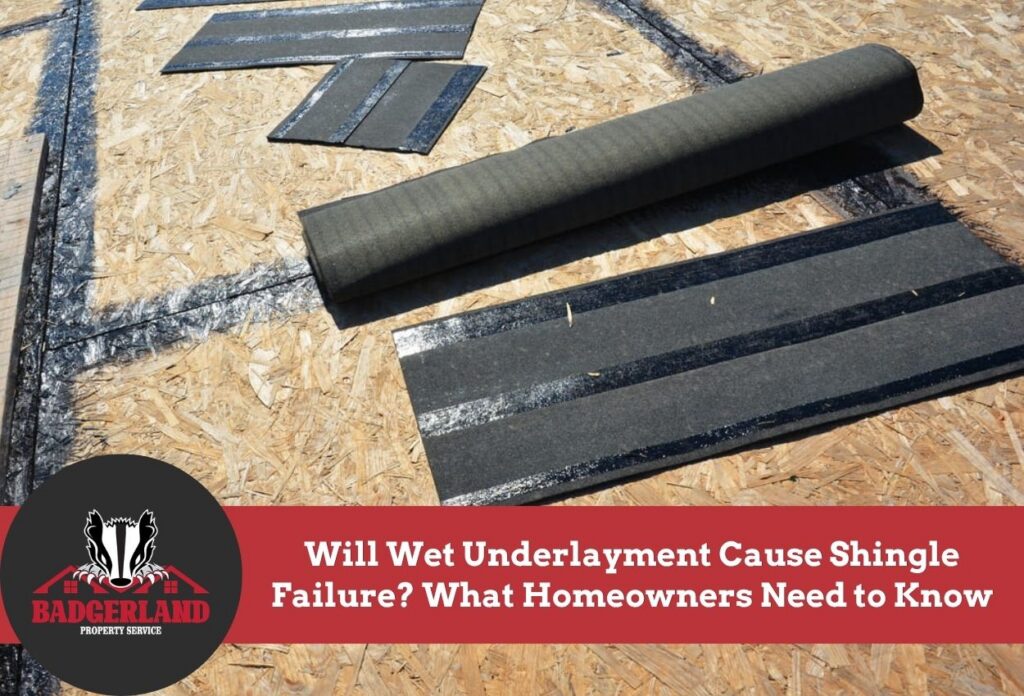

Wet underlayment can cause shingle failure, but the outcome depends on underlayment type, how saturated it gets, and how fast shingles go down over it. Asphalt-saturated felt paper loses up to 40% of its tensile strength when fully saturated. That loss matters in Madison, WI, where average annual relative humidity sits around 72% and early summer months bring 4.1 to 4.5 inches of rain, meaning exposed underlayment during roofing season is a real and repeated risk.
There are two ways this plays out. Underlayment that dries fully before shingles are installed typically performs as designed, holding moisture out and allowing the roofing system to work correctly. Underlayment that gets shingled over while still wet is the scenario that leads to problems: buckling shingles, mold growth under the roof deck, and premature failure of the entire system.
What Actually Happens to Underlayment When It Gets Wet and Does It Recover?
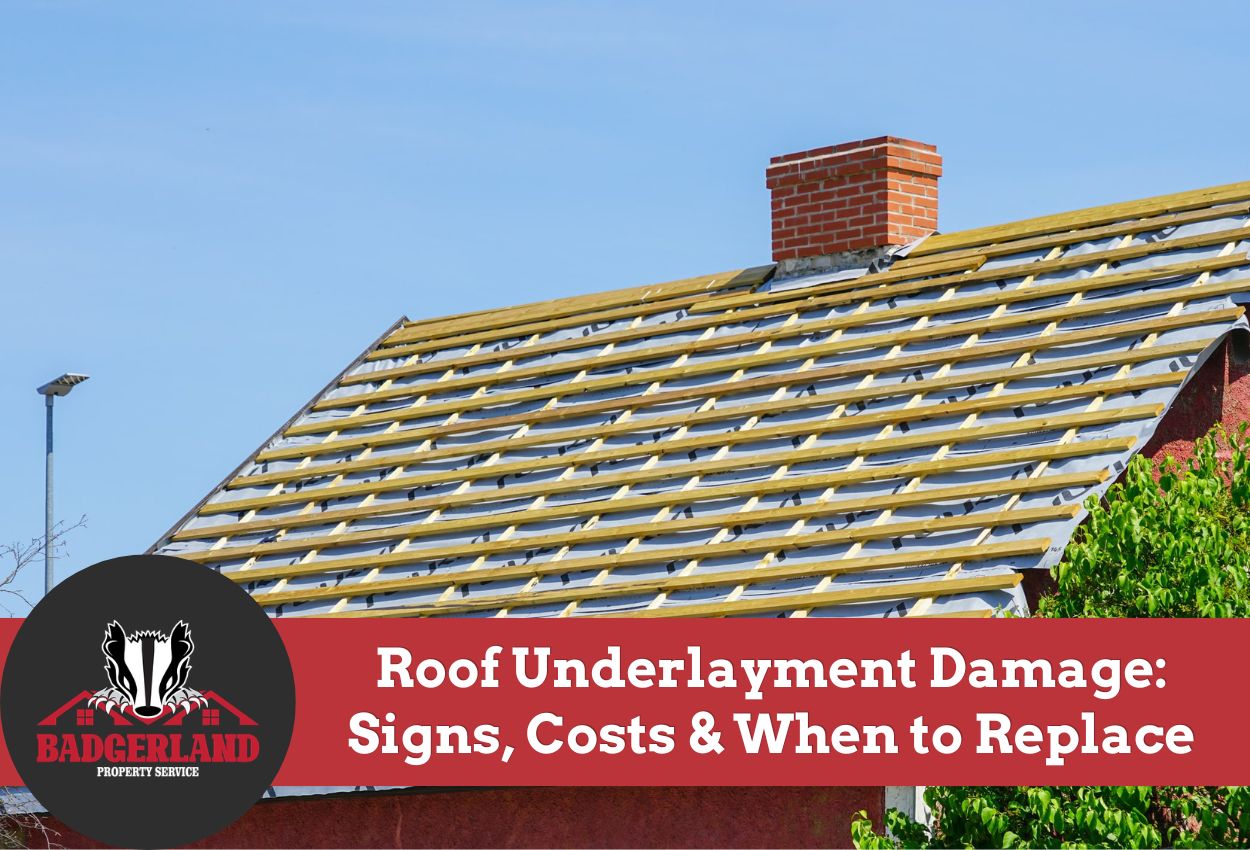
The two underlayment types used on Wisconsin roofs behave very differently when moisture hits them. Asphalt-saturated felt, the traditional black paper meeting ASTM D226 standards, can absorb 30% to 40% of its own weight in water and wrinkles badly in the process. Synthetic polypropylene underlayment absorbs less than 1% moisture by weight and returns to near-original dimensions after drying.
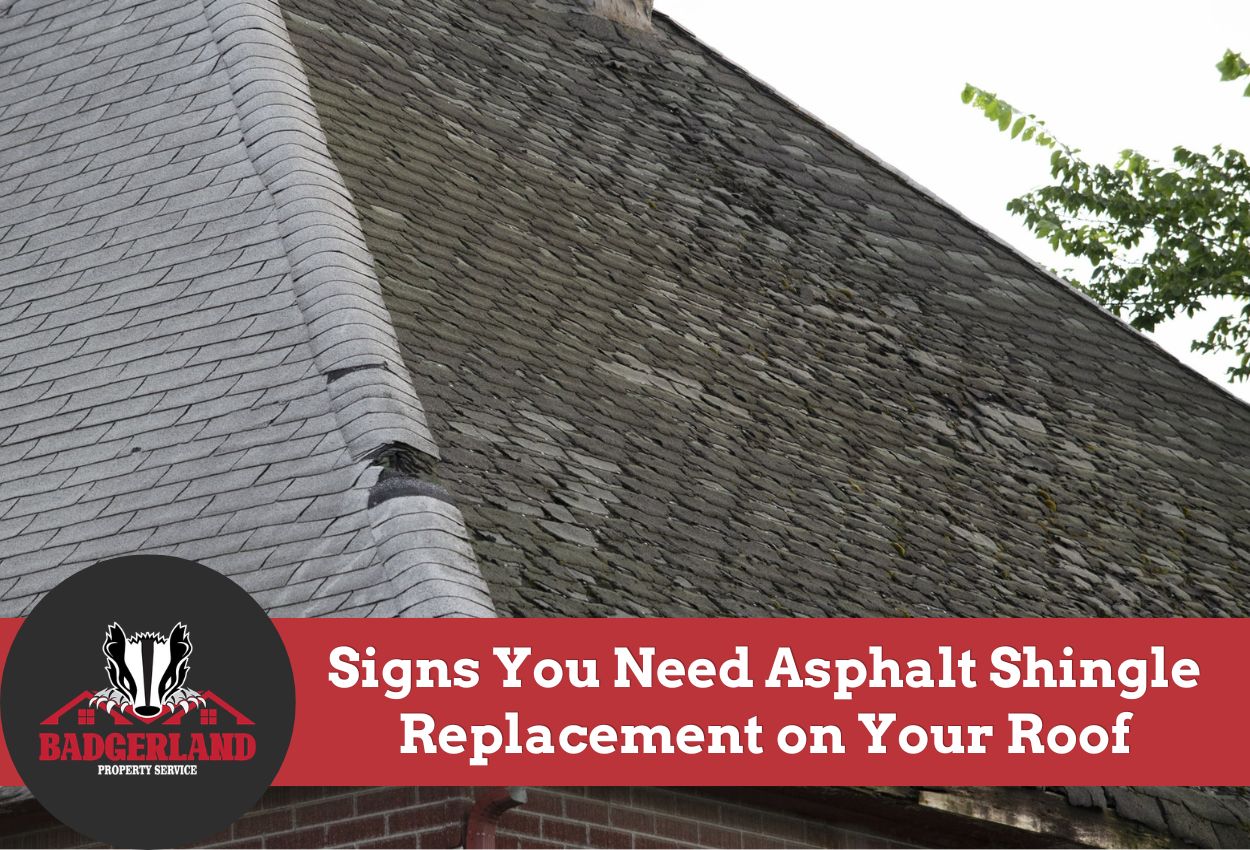
That gap matters once shingles go down. When felt absorbs water, it expands across the roof deck. If shingles are fastened over the felt while it’s still in that expanded state, the felt then contracts as it dries and it has nowhere to go. The tension pulls and ripples the material beneath the shingles, and those ripples telegraph right through to the shingle surface above. In most cases, buckled shingles become visible within 30 to 90 days of installation. By then, the shingles are already fastened in a distorted position, and the damage is done.
Felt also carries a mold risk that synthetic underlayment does not. Asphalt-saturated felt that stays wet under shingles in Madison’s 65% to 79% relative humidity environment can begin supporting mold growth on the wooden roof deck beneath it within 24 to 48 hours of sustained saturation. Synthetic underlayment sheds water fast enough that this condition rarely develops, which is one of the stronger practical arguments for choosing it on any residential roof installation during Madison’s wet spring and early summers.
How Long Does Wet Roofing Underlayment Need to Dry Before Shingles Are Installed?
Drying time ranges from under 1 hour for synthetic underlayment to 24 to 48 hours or more for fully soaked felt paper in spring conditions. The type of underlayment, how saturated it became, and the outdoor temperature at the time of installation all drive that number. In Madison, where spring highs run 43 degrees to 57 degrees, and humidity stays elevated, felt paper needs far more drying time than most installers allow on a tight schedule.
| Underlayment Type | Saturation Condition | Estimated Drying Time Summer (68 degrees to 82 degrees Fahrenheit) | Estimated Drying Time Spring (43 to 57 degrees) |
|---|---|---|---|
| Asphalt-saturated felt | Light dampness | 1 to 2 hours of direct sun | 6 to 12 hours |
| Asphalt-saturated felt | Fully soaked | 2 to 4 hours of direct sun | 24 to 48 hours or longer |
| Synthetic polypropylene | Light dampness | Under 30 minutes | Under 1 hour |
| Synthetic polypropylene | Fully soaked | Under 1 hour | Under 1 hour |
Contractors check readiness by hand before shingles go down. Underlayment is ready when it lies completely flat, does not feel cool or damp to the touch, and has returned to its original dimensions. Installing shingles over underlayment that still shows wrinkles larger than ¼ inch is a known installation defect that permanently transfers those waves directly into the finished roof. If the underlayment passes all three tactile checks, work can proceed safely.
Does Moisture Under Shingles Cause Buckling and What Are the Signs?
Yes, moisture trapped under shingles causes buckling, and asphalt shingles installed over persistently wet underlayment can fail 5 to 10 years earlier than their rated lifespan. A 30-year architectural shingle may perform like a 20- to 25-year product if underlayment moisture compromises the seal-down strip adhesion. Here are the 5 signs to watch for:
- Visible shingle rippling or waviness: Rippling typically appears within 30 to 90 days of installation as wet felt contracts beneath fastened shingles. Once shingles are nailed in a distorted position, the waviness is permanent.
- Raised nail heads or popped fasteners: Roof deck movement from moisture absorption pushes fasteners upward over time. Popped nails are usually detectable within 6 to 12 months of a problem installation.
- Dark staining on interior underlayment: Water staining or discoloration on the underside of the roof deck can appear within weeks of sustained saturation. It often signals mold is already developing.
- Granule loss concentrated in wavy zones: Buckled shingles flex with wind and temperature changes, accelerating granule loss in those areas. Concentrated granule loss in rippled zones is a reliable warning sign.
- Soft or spongy roof deck feel during inspection: Roof deck rot from trapped moisture may take 1 to 3 years to become detectable underfoot, but once present, it means structural repairs, not just a shingle replacement.
Most major shingle manufacturers void material warranties if installation over wet or wrinkled underlayment is documented.
Wisconsin building codes limit homes to two roofing layers. If moisture compromises your base layer, you cannot legally install a simple overlay. You will be forced to pay for a complete tear-off, making early detection incredibly valuable.
Can You Shingle Over Wet Felt Paper, or Does It Need to Be Replaced?
Felt that is damp on the surface only, lying flat with wrinkles under ¼ inch and no roof deck staining, can be allowed to dry and then shingled, but felt that is fully saturated, severely wrinkled, torn, or heavily degraded must be discarded and replaced entirely before shingling can safely resume.
Here is how to make that call on each condition:
- Surface is damp but flat: Shingle over it once it passes a hand check: no cool or wet feeling, no visible wrinkles exceeding ¼ inch, and no soft spots in the roof deck below.
- Wrinkles are under ¼ inch: Allow drying time based on conditions (up to 24 to 48 hours for felt in cool spring weather) and re-check before any shingles go down.
- Roof deck shows no dark staining and felt has been exposed less than 48 hours: Shingling can proceed after confirmed drying. Staining present at any point means the roof deck needs inspection before work continues.
- Full saturation is present, or wrinkles exceed ¼ inch: Replace the felt. Saturated felt that has swelled beyond its original dimensions will contract under shingles and cause the buckling and rippling described above.
- Felt has been repeatedly wetted and dried, or ice and water shield adhesion at eaves is compromised: Replace it. Cycling breaks down the fiber structure, and failed adhesion at the eaves creates a direct ice dam leak path, a real risk across Madison’s December through March snow season.
Wisconsin administrative code requires Type I underlayment or equivalent with no water transmission per ASTM D226. Saturated felt that fails to meet this performance standard at the time of installation creates a code compliance issue and a long-term performance risk. These are two vital reasons why replacement remains the safest answer upon confirming full saturation.
What Does It Cost to Fix Shingle and Underlayment Damage From Trapped Moisture?
Waiting 1 to 4 hours for underlayment to dry before shingling costs $0 in materials and avoids $1,200 to $8,500 in corrective repairs, making drying time the highest-return action in a residential roofing project. The table below shows how repair costs escalate at each stage of moisture damage.
| Scenario | Scale of the Work | Estimated Cost in Madison, WI | Compared to Prevention Cost |
|---|---|---|---|
| Underlayment replacement before shingling | Remove and replace wet felt or synthetic underlayment before shingle installation | $150 to $400 materials | Lowest possible cost: no labor disruption |
| Shingle removal and underlayment replacement after installation | Strip installed shingles, replace underlayment, reinstall shingles | $1,200 to $2,800 labor and materials | Up to 18x the prevention cost |
| Partial roof deck replacement due to moisture rot | Remove shingles and underlayment, replace rotted roof deck sections, reinstall | $2,000 to $5,000 depending on rot extent | Up to 33x the prevention cost |
| Full tear-off and reroof after premature failure | Complete tear-off, full roof deck inspection and repair, new underlayment and shingles | $5,500 to $14,000 or more | Up to 90x the prevention cost |
Madison’s temperature changes accelerate this damage in a specific way. Trapped moisture that freezes expands into wood grain, breaking down the roof deck faster than moisture alone, and what starts as an underlayment replacement can escalate to full roof deck replacement, adding $2,000 to $5,000 or more to the total project cost.
Wisconsin’s two-layer reroofing limit means many moisture-damaged roofs require a full tear-off rather than a less expensive overlay, pushing repair costs to the higher end of these ranges. Catching moisture problems before shingles go down is the only stage where a homeowner pays nothing extra. Badgerland Property Service addresses underlayment condition at that stage before the expensive damage begins.
Get a Professional Assessment of Your Madison Roof Before the Problem Gets Worse
Shingles installed over wet underlayment can buckle, lose adhesion, and fail prematurely. Furthermore, Madison’s harsh winter temperature swings often turn a minor moisture issue into a complete structural tear-off, creating massive financial headaches for homeowners. A professional residential roof inspection now catches those issues before winter locks in the damage.
If your roof was installed or re-shingled during a wet stretch this past spring or summer, this is the right time to have it checked. Badgerland Property Service provides professional moisture assessments for Madison, WI homeowners, identifying buckling, adhesion failures, and roof deck concerns before they escalate.
Schedule your free roof inspection.
Not ready to schedule? Learn more about asphalt shingle installation and underlayment standards.